Local Governments Are Smoking Hopium on Property Tax Relief
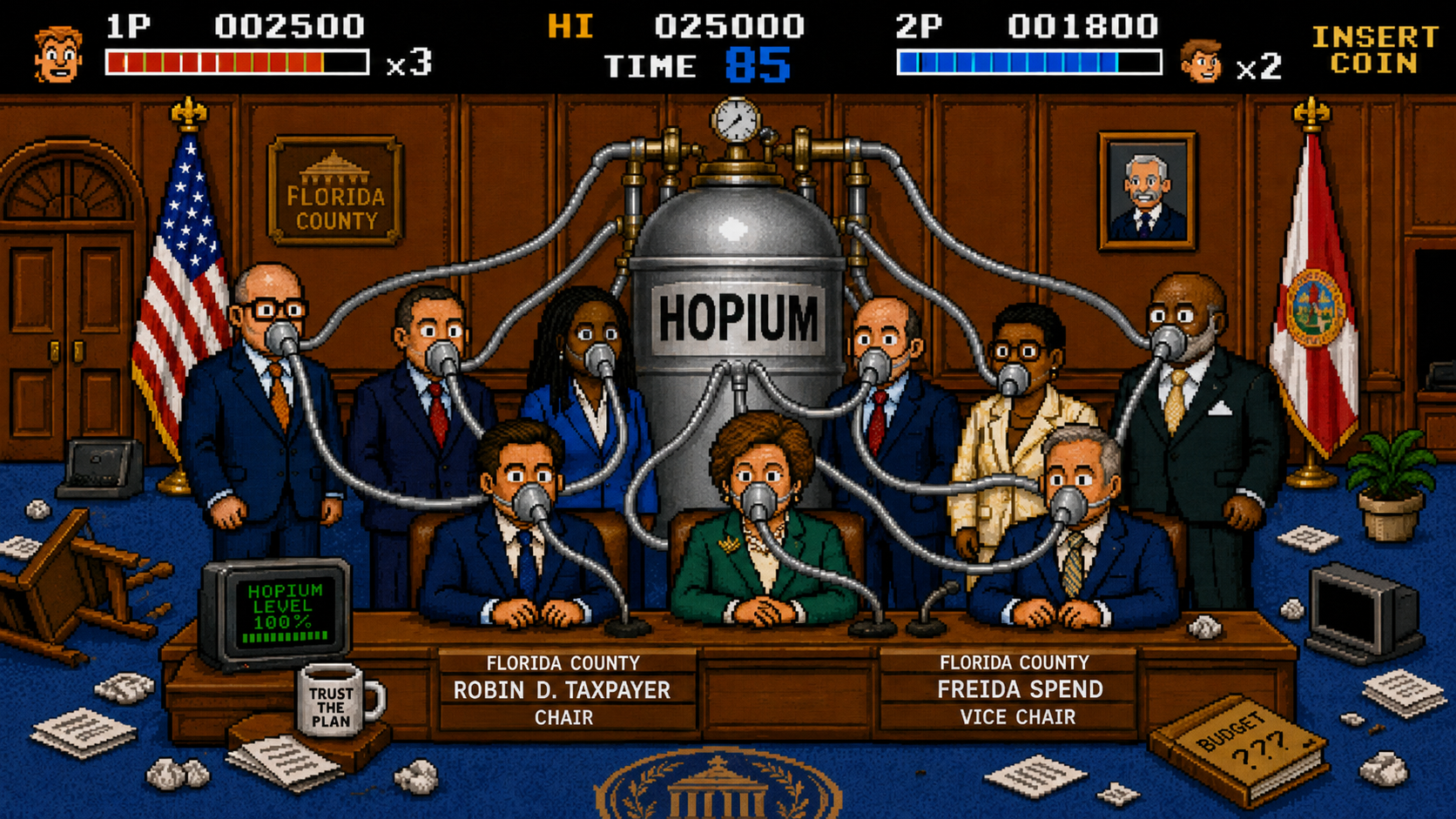
If you vote for a tax cut, your house might burn down.
That is the actual threat local governments are making as a massive property tax cut heads toward the November 2026 ballot. They're making the same mistake they made in 2008.
Back then, cities, counties and municipal lobbyists warned that property tax relief would come at the direct expense of basic public services. They said police departments would be cut. Fire rescue would be strained. They claimed local governments would be forced to make painful choices that voters supposedly did not understand.
The warnings were not subtle.
The Florida Police Chiefs Association warned that tax reform would have “devastating results.” Voters were told plans for libraries, fire stations and parks could be scrapped.
Today, local officials are running the exact same playbook. They want to turn a tax cut into a public safety scare.
Just look at the advocates online. They recently pointed to a national horror story about firefighters in rural Tennessee letting a home burn to the ground because the owner had not paid a $75 fire fee. Then they asked what your local fire department is supposed to do if it loses a large part of its revenue.
The implication is obvious. Cut property taxes, and maybe the fire department will let your house burn down.
Florida voters heard that exact argument in 2008. They passed the tax cut anyway.
Guess what? The state didn’t collapse. Police still answered 911 calls and fire trucks still rolled out of the stations.
The reason it passed is not complicated.
Then Gov. Charlie Crist had the microphone, and he knew how to use it. He sold the $50,000 homestead exemption in plain language. Taxes, he promised, were going to drop like a rock.
Local governments had their hair-on-fire hysterics. Crist had the sound bite.
The same dynamic is forming right now. The Legislature has put a proposed constitutional amendment on the November 2026 ballot that would raise the homestead exemption from $50,000 to $150,000 in 2027, and then to $250,000 in 2028. Local officials are already warning that the proposal will blow holes in city and county budgets.
Some of that concern is predictable. Some local governments rely heavily on property taxes. But their political problem is that they are treating 2026 like it is 2018 or 2022.
Local officials love to point to those two failed property tax amendments as proof that Floridians already rejected more homestead relief. That’s where they are smoking hopium.
Hopium is what happens when you want something to be true so badly that you start ignoring the obvious evidence against it.
It’s worth remembering how little political force was behind those efforts, and what they didn’t have. There was no governor making property taxes the centerpiece of a statewide argument. There was no daily drumbeat telling voters that this was their chance to force City Hall to tighten its belt.
Still, they nearly passed. The 2018 proposal received about 58% of the vote. The 2022 proposal received nearly 59%.
Local governments know this, which is why the warnings are getting louder.
But voters also know that property values have exploded, and their tax bills have gone up. They know cities and counties have been collecting more money while many elected officials claim they did not raise taxes because they held the millage rate steady.
As I have written in HelloFLA, taxpayers are funding county driven Ford Mustangs. We are paying for inspector general offices that produce thick reports and do absolutely nothing else. Voters see the free concerts and the renderings for new Taj MaCity Halls.
When local politicians waste money like that during an affordability crisis, it changes the math. Putting a massive property tax cut on the ballot is essentially giving voters a “give yourself a raise” button. When the cost of living is this high, that button is impossible to beat.
Local officials can keep pretending that the near misses in 2018 and 2022 prove voters love the current system. They can keep hoping the 60% threshold saves them again.
But that’s just hopium. They should stop acting shocked that homeowners want relief and start preparing to justify the spending that voters are about to put under the microscope.